Medibotics:
Innovation at the Convergence of
Medical Devices and Wearable Technology

[minimalist website without a single AI-generated video!]

* Wearable Biometric Sensors and Food Consumption Tracking: Innovative wearable devices (e.g. smart rings, glasses, and wrist-worn devices) with biometric sensors (e.g. optical sensors) and wearable devices which help people to track the types and quantities of food which they consume.  Concerning wearable biometric monitoring, there has been significant innovation in wearables (such as smart rings and watches) with biometric sensors, but challenges remain.  Some of these challenges which Medibotics' tackles include: air gaps between devices and body tissue caused by body size variation between different people and over time; changing sensor locations due to device shifting during body motion.  Concerning food consumption tracking, nutritional intake plays a major role in a person's health, but there is a lot of consumer friction with current food logging apps.  Also, tracking food consumption using only wearable motion sensors does not shed much light on the types of food consumed.

* Wearable Devices with EEG Sensors: Innovative wearable devices (e.g. eyeglasses, headbands, and ear-worn devices) with EEG sensors which monitor brainwaves.  Applications include: real-time detection and prediction of seizures; brain-computer-interface for people with body paralysis; and hands-free interface for augmented reality eyewear.  Medibotics is also working dry EEG electrode designs which can achieve good electromagnetic contact with a person's head through their hair without causing discomfort (e.g. poking prongs) or requiring hand manipulation (e.g. wiggling).

* Wrist-Worn Cameras and Expandable Displays: Innovative designs for wrist-worn devices, including tackling the problems of: (1) how to configure a display with an expandable size for a wrist-worn device; and (2) where to place a camera on a wrist-worn device to enable a person to take outward-facing pictures without having to contort their arm.  Some companies are working on developing curved display screens to span the entire wrist circumference.  However, such circumferential curved screens require a person to rotate their wrist in order to access a large portion of the screen.  There remains a need for wrist-worn devices with innovative screen configurations, including expandable screens, which enable larger-scale human-computer interaction on the wrist.

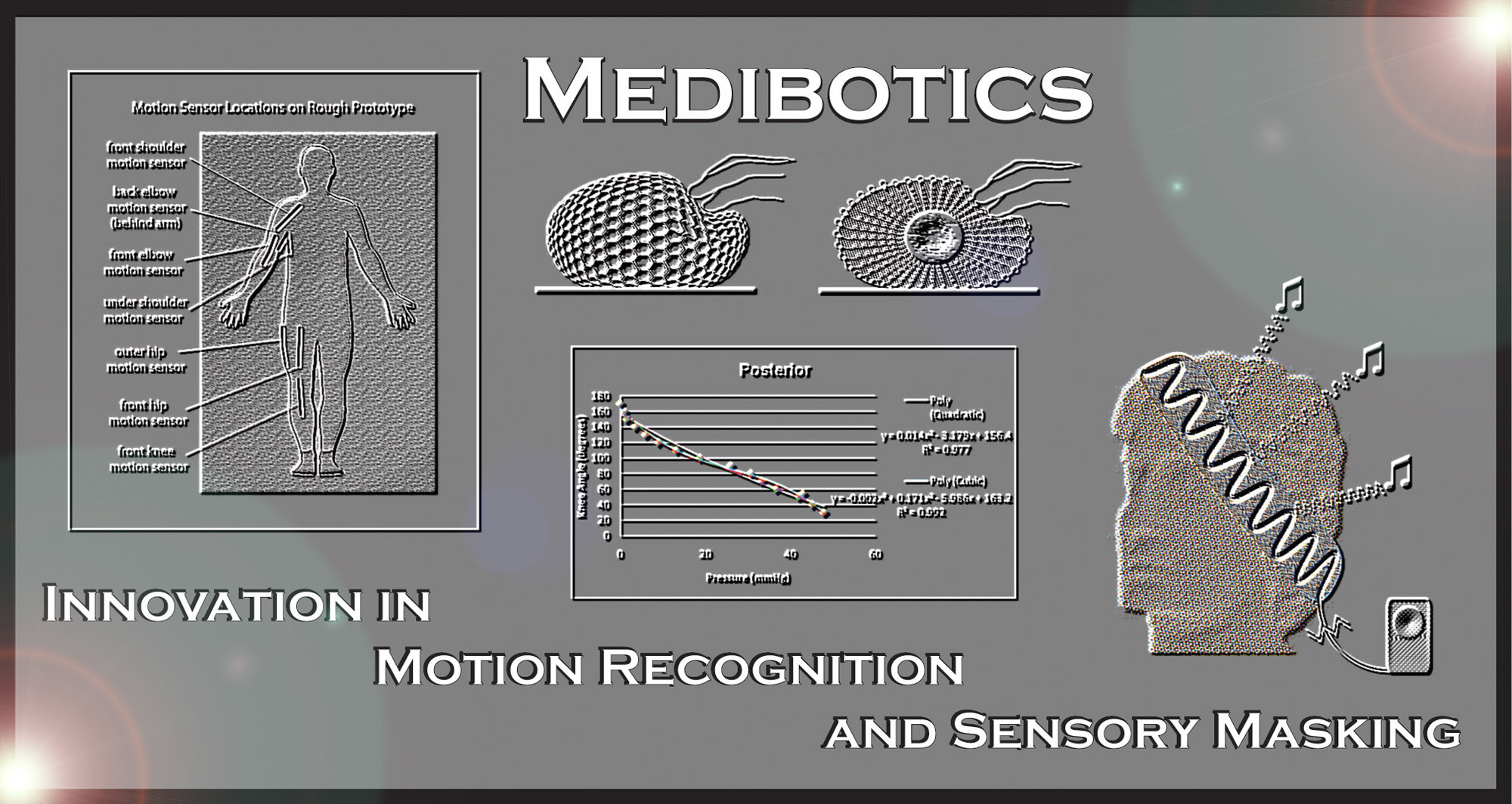
* Full-Body Motion Recognition Clothing: Medibotics' work on smart clothing has focused on motion recognition clothing for (full) body motion capture, including measuring joint configurations and posture.  Motion recognition clothing has applications for sports and exercise, work injury avoidance, medical diagnosis and rehabilitation, and human motion capture in VR/AR environments.  It can integrate multiple sensor types (e.g. resistive/capacitive bend sensors, inertial sensors, and EMG sensors) which span joints at different angles.

* Smart/Transparent Face Masks: The most common air-filtration face masks are passive filtration masks which do not have active ventilation mechanisms such as motorized air impellers.  Passive filtration masks have some advantages.  They tend to be relatively light-weight, inexpensive, and do not generate noise. However, passive filtration masks are almost universally opaque because transparent materials tend to be impermeable to airflow and thus aggravate the accumulation of carbon dioxide, humidity, and heat within the mask.  Lack of transparency interferes with human communication which relies on viewing mouth expressions.  This is especially true for interpersonal communication involving people who are rely on lip reading for communication.  There is a need for a smart mask with a transparent portion (at least over a person's mouth) which allows expressions to be seen and lips to be read, including a light-weight, quiet active air filtration system.

* Implantable and Wearable Cardiovascular Systems: Modern cardiac pacemakers use data from implanted sensors, such as inertial motion sensors in a person’s torso, to help determine when heart function should be increased (in response to exercise, for example) to provide more oxygen to muscles and other body tissue.   As the quality and scope of tissue oxygenation and other biometric data from wearable devices such as smart watches and smart rings improves, incorporating this data into an integrated implanted-and-wearable feedback system for cardiovascular management has the potential to improve the control of tissue oxygenation, particularly for body extremities.

* Archived Medibotics Website: 2010-2024

(c) 2025 Medibotics